
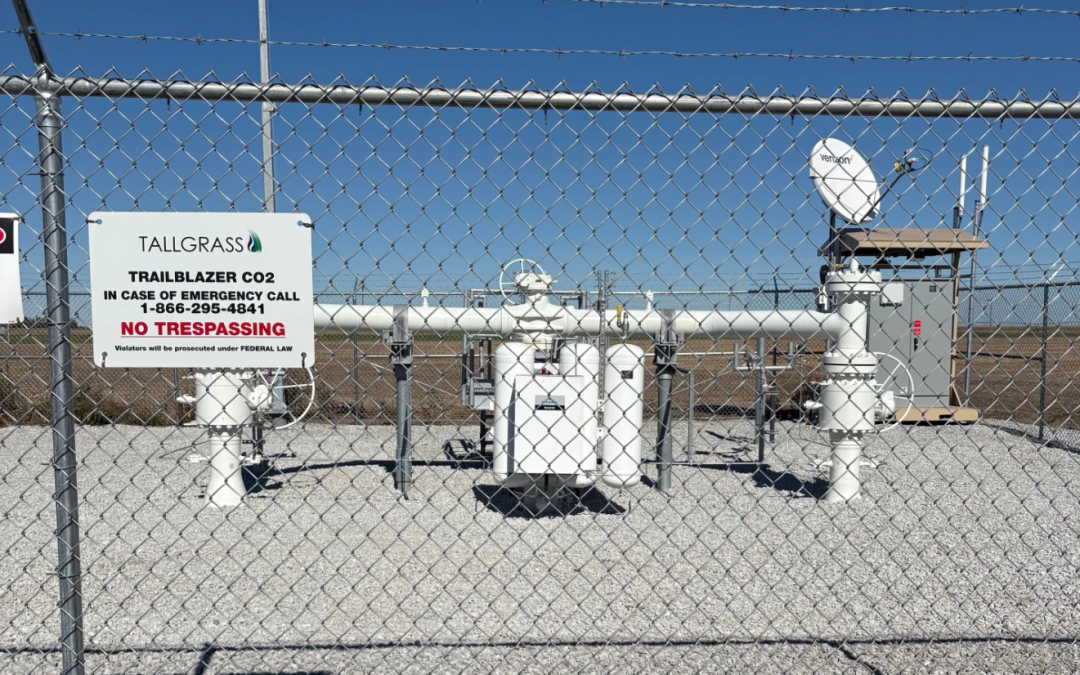
Photo courtesy of (S. Andreasen via AP)
BISMARCK, N.D. (AP) — A multi-state carbon capture pipeline began operating in September, reducing emissions from Midwest ethanol plants and carrying that carbon dioxide gas to be forever buried underground in Wyoming — an achievement after years of complaints, lawsuits and legislation blocked similar efforts by other companies.
Other projects prompted intense opposition, including one that has run up $1 billion in spending with no guarantee of success, but the Tallgrass Trailblazer Pipeline is being praised. The reason: community negotiations and financial support.
“I wish all energy companies would treat communities with a lot more respect like Tallgrass did,” said Jane Kleeb, whose group Bold Nebraska has fought other carbon capture and oil pipelines.
Carbon capture pipelines
The Tallgrass pipeline has started moving emissions from 11 ethanol plants in Nebraska and one in Iowa to a site in southeast Wyoming, where the greenhouse gas will be buried 9,000 feet underground.
The fermentation process to convert corn into fuel releases carbon dioxide. By capturing it before it’s released into the air, plants can lower their carbon intensity score, making the ethanol more attractive for refinement into so-called sustainable aviation fuel — a market some believe could climb to 50 billion gallons annually. The Midwest-based ethanol industry sees jet fuel as essential to its future, offsetting expected declines in demand for motor vehicle fuel as more drivers switch to electric vehicles.