
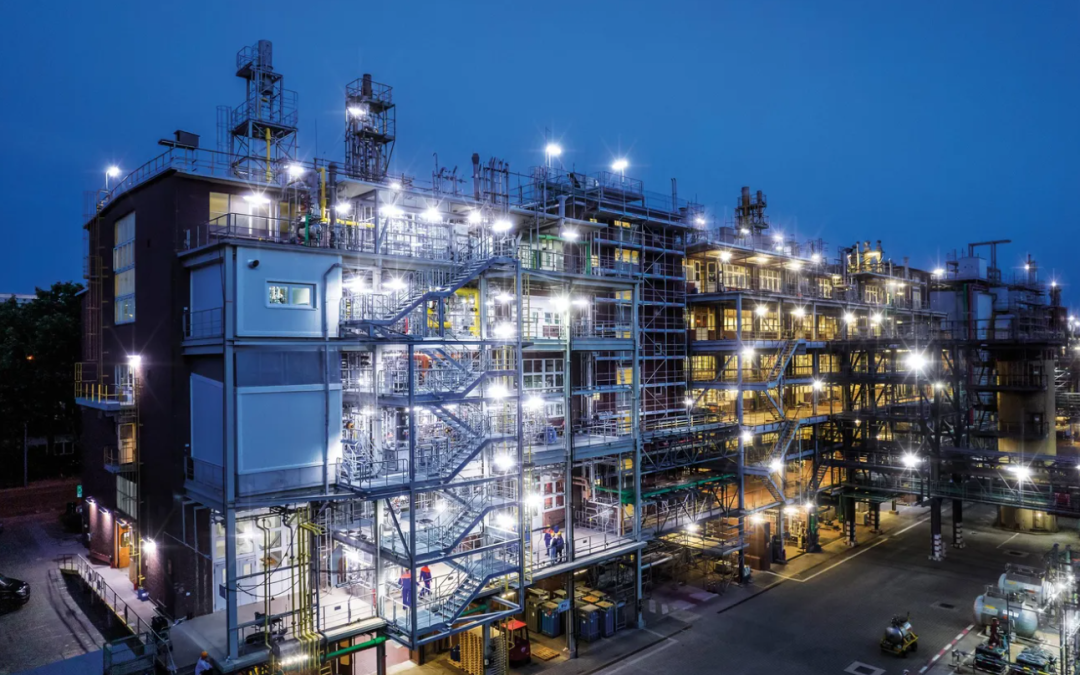
Photo courtesy of Xaver Lockau/BASF
US supermajor ExxonMobil and German chemicals giant BASF have announced that they will partner on a methane pyrolysis pilot in the US that would produce so-called “turquoise” hydrogen.
While “blue” hydrogen is produced via natural gas in processes that generate carbon dioxide, which has to be captured and stored for the hydrogen to be considered low-carbon, methane pyrolysis splits natural gas under high heat in the absence of oxygen.
This means that no CO2 is produced during the process, but rather solid carbon, which proponents argue can be sold to existing markets for the material.
The pilot project would be sited at ExxonMobil’s Baytown refining complex in Texas and produce 2000 tonnes per annum of hydrogen with 6000 tpa of solid carbon by-product, Upstream’s sister title Hydrogen Insight reported.
ExxonMobil noted in a press release that methane pyrolysis requires five times less electricity than electrolytic hydrogen production, as well as not requiring the use of water.